
EuRoC 2025
Codename WaxwingHyPower's 2025 vehicle at the European Rocketry Challenge: 25 teams, first of the UK entrants, grounded 800 m from the pad.
Design cycle two
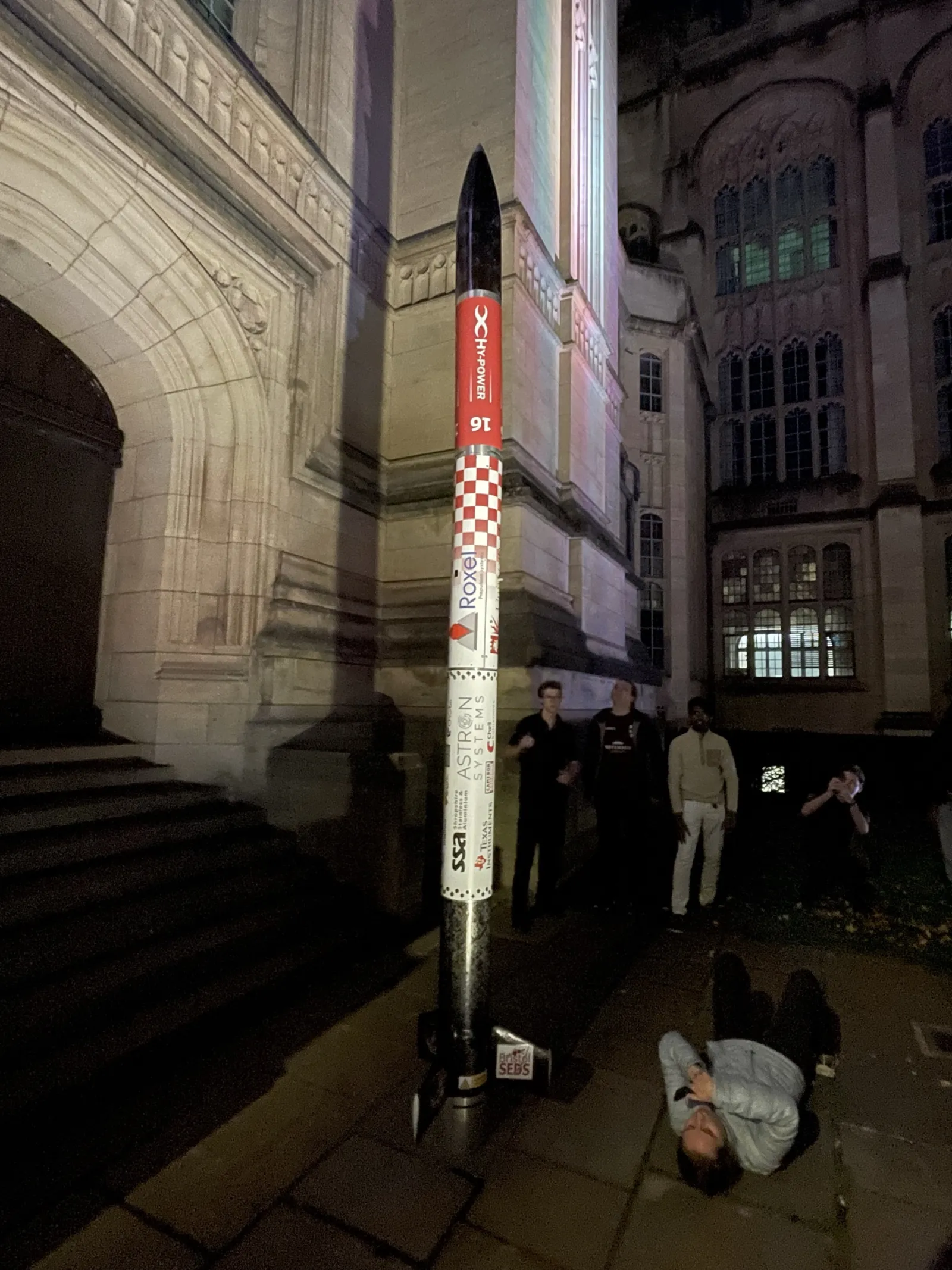
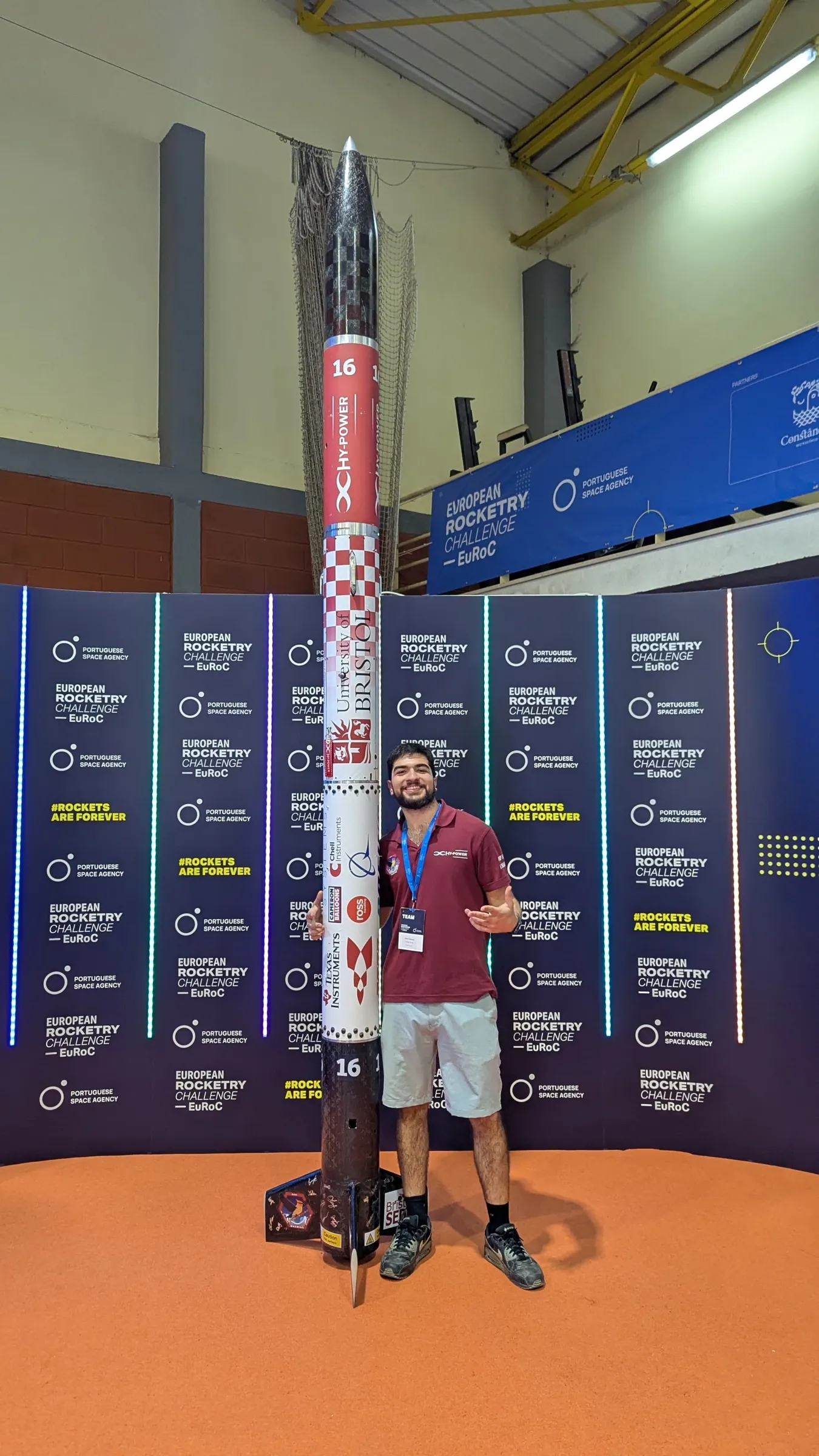
Waxwing was HyPower Bristol's second design cycle, after Feynman and before Tempest: an entry in the 3 km liquid category, built by a team of sixty across propulsion, launch vehicle, electronics and ground station. Four metres tall, 200 mm across, 83 kg on the pad, running nitrous oxide and IPA through a regeneratively cooled engine fed from a coaxial tank. Everything from the engine to the avionics to the main parachute was student researched and designed.
The vehicle went vertical outside the Wills Memorial Building on 5 October, decals on, four days before the team flew out to Portugal.
The vehicle on paper
EuRoC runs on documentation. The technical report is 227 pages: the propulsion system, the aerostructure, the airbrake controller, recovery, ground operations, avionics down to individual board schematics, the payload, then a hazard analysis, a risk register, a compliance matrix and the pad and flight checklists. Propulsion is section 3, with the supporting analysis in appendix H. I led that sub-team.
It also records where the design landed rather than where it started. The coaxial tank had imploded the year before on a pressure differential, and the fix, an inner wall taken out to 8.5 mm for a safety factor of 10, cost enough mass that the predicted apogee fell from 3000 m to about 2100 m. The airbrakes existed to trim the vehicle to 3000 m, so they were locked shut and flew as a coupler. The flight card went in at 2056 m above ground, 32.6 m/s off the rail against the 30 m/s minimum, 4.2 calibres of stability.
 Team 16 technical report, EuRoC 2025Team 16 technical report, 227 pp. Propulsion is section 3 and appendix H.227 pp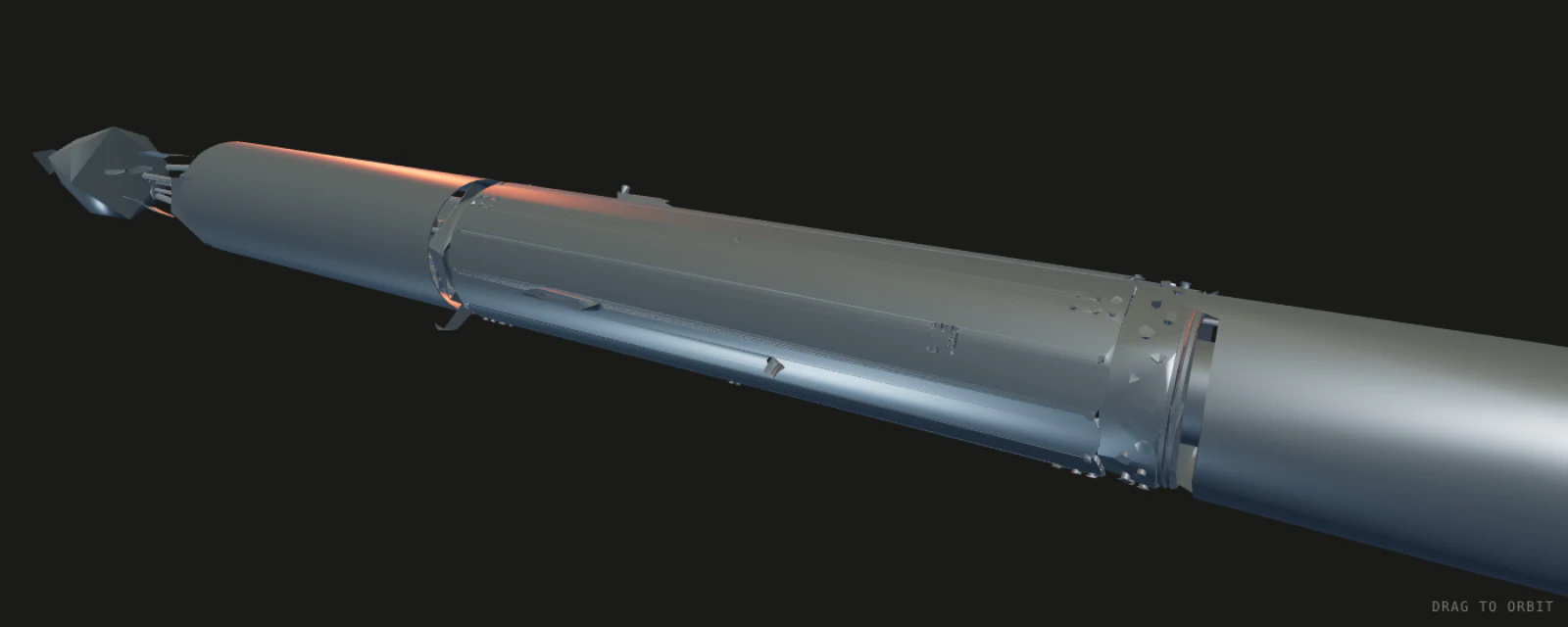
Loading model 0%
Stand 16
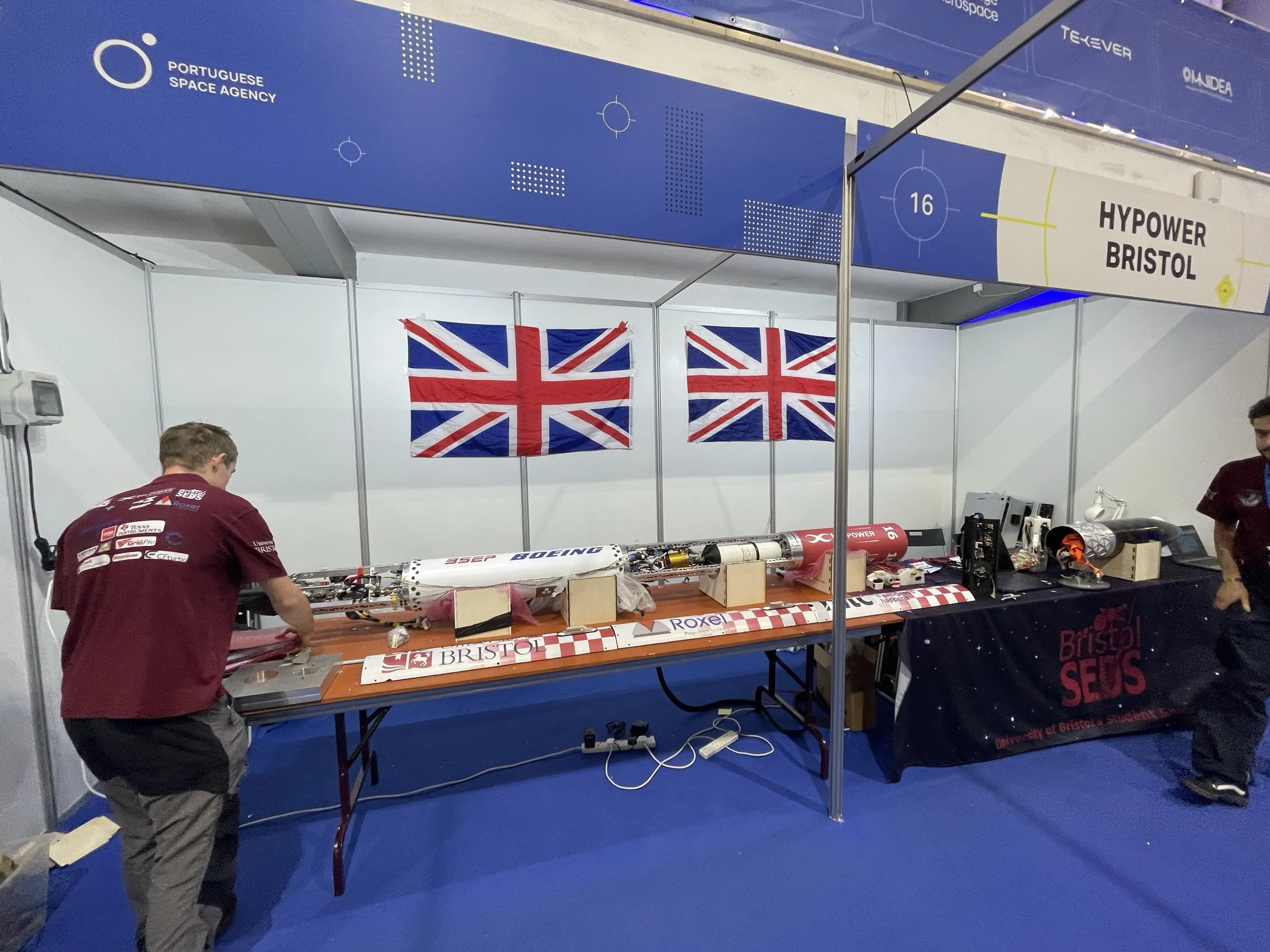
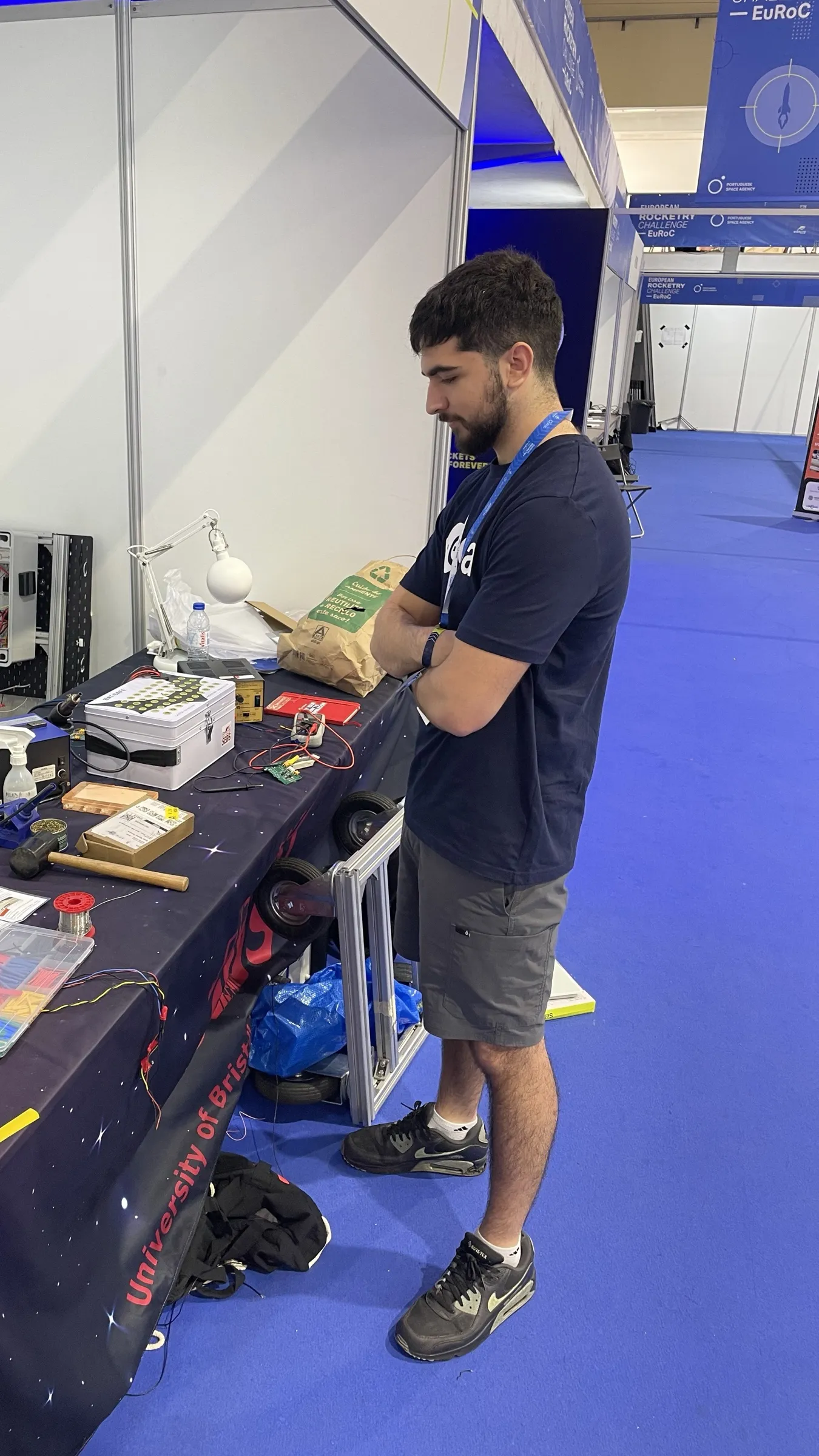
A competition campaign is mostly bench work. Waxwing arrived in sections and spent the week on trestles at stand 16 while we worked through the review gates: design, safety, flight readiness. We passed every one of them, including the flight readiness review.
Twenty five teams were entered that year, and the hangar runs on the same rhythm for all of them: fix, document, present, wait.
The propulsion system
Engine 1 was the flight engine: heat-treated Inconel 718, printed by the Manufacturing Technology Centre, regeneratively cooled by the fuel through 56 vertical channels behind a 0.8 mm inner wall, with 15 per cent film cooling and a 1 per cent PDMS additive on top. The minimum safety factor is 3.24, at the throat, against Inconel's yield strength at the local wall temperature. Before the campaign we took a chamber of the same design hydrostatically to 30 bar for ten minutes against a 20 bar nominal chamber pressure, with no damage and no leaks.
The new machined coaxial swirl injector was not through testing in time, so the flight article was the previous cycle's steel like-like impinging doublet: 20 oxidiser orifices at 2.3 mm, 20 fuel orifices at 1.1 mm, 10 film cooling elements at 0.7 mm, canted 40 degrees, sized for 1.93 kg/s of nitrous and 0.64 kg/s of IPA at an O/F of 3. Propellants are pressure fed by blowdown from a 3 litre nitrogen COPV, through geared servo ball valves in three sizes, with burst discs set at 65 bar against a 50 bar tank rating. Ignition is an e-match into a sparkler, five seconds, fuel valve full open, 0.3 seconds, oxidiser full open: three for three at Astron with no hard start.
Twelve seconds along that hardware on the bench in the hangar: the printed chamber and its bell nozzle, the injector and valve block with the feed lines and pressure transducers hanging off it, then the tank sections and their bulkhead plumbing.
800 metres from the pad
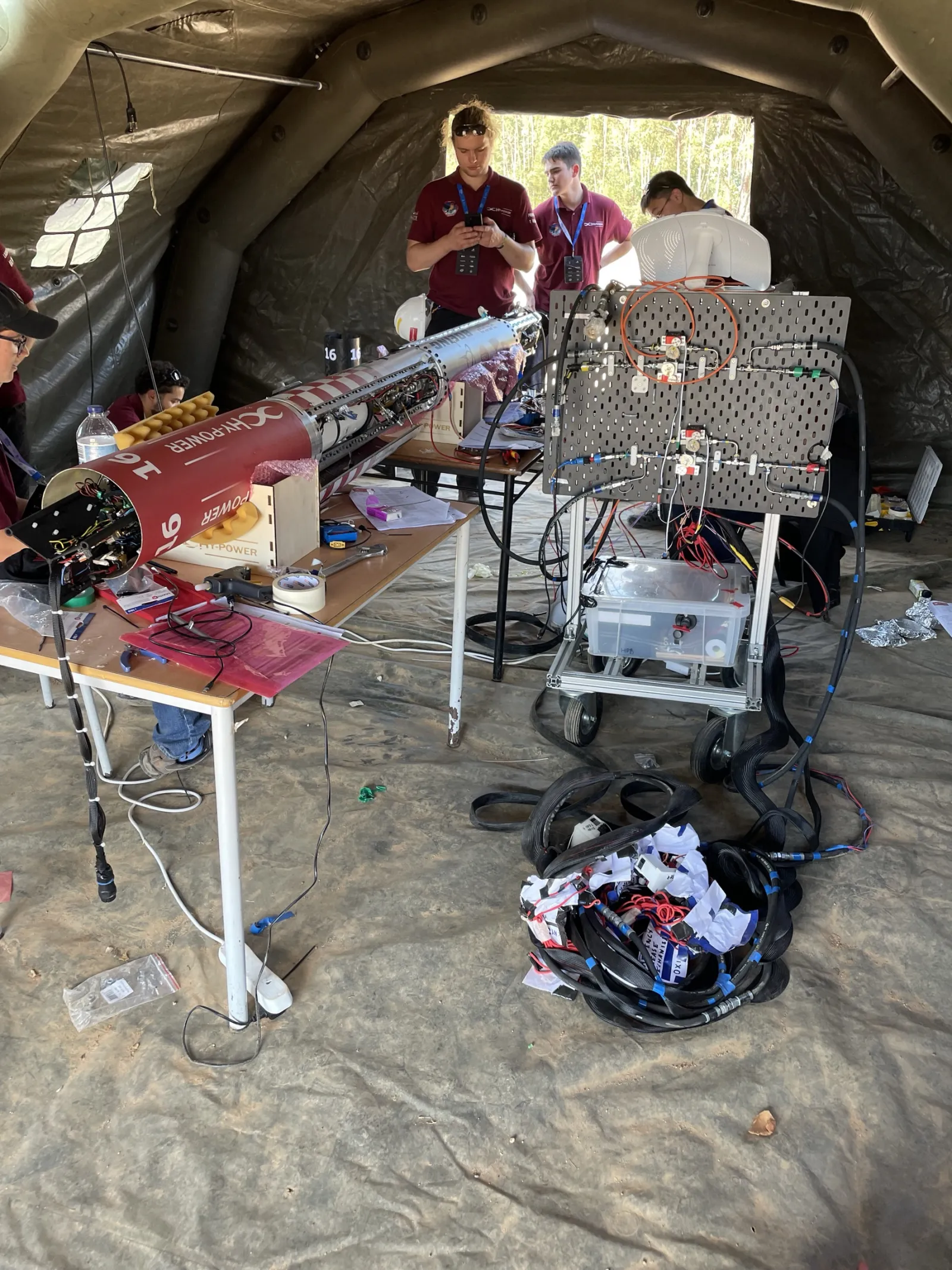
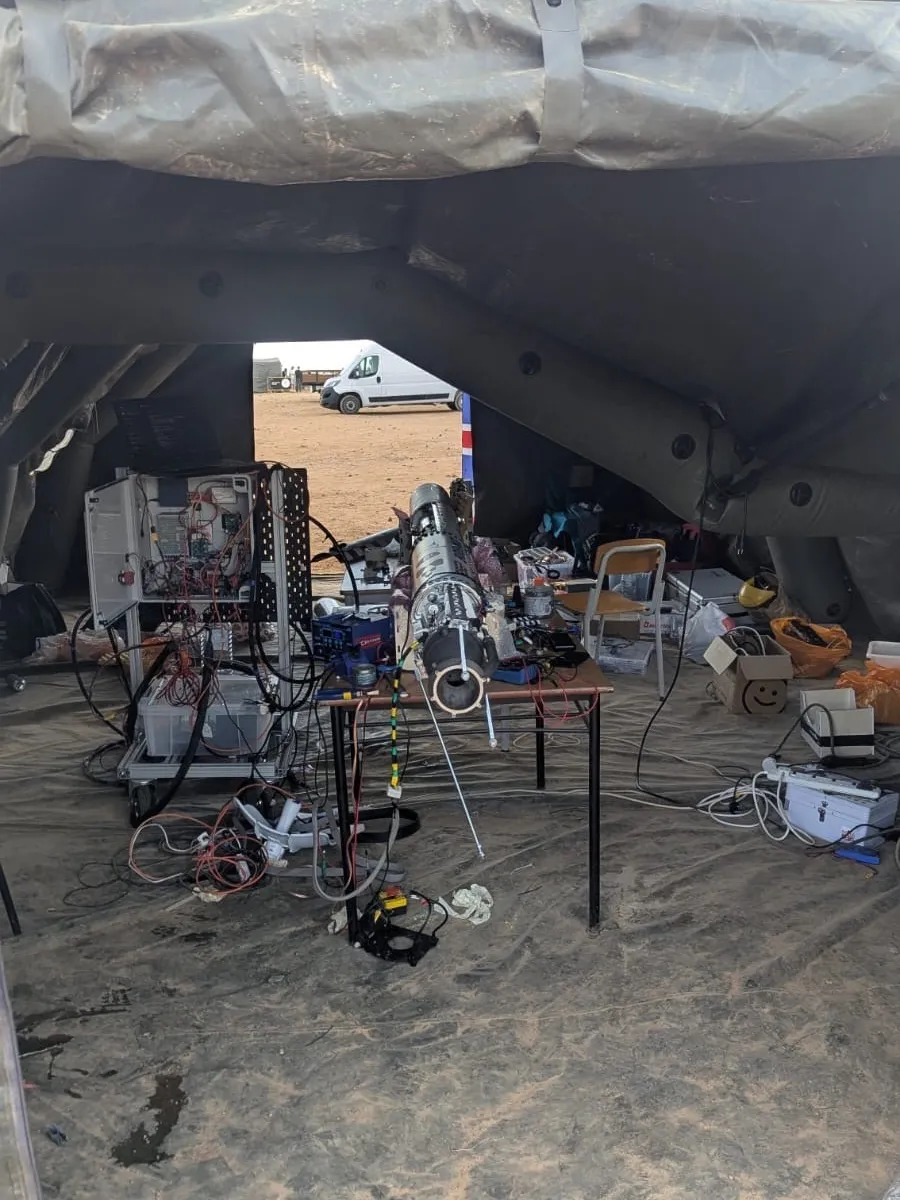
The launch readiness review is the last gate, and it is the one we failed. The technical evaluation board required a secondary backup path to the servo-controlled valves. Running that as a direct line meant pushing the control signal down ten metres of cable, which was long enough to distort it: the servos misread the PWM and burned out. The rocket stopped 800 metres short of the pad.
It is a specific, unglamorous failure, and a signal integrity problem rather than a propulsion one. It is also the kind of thing a competition exists to find. The 2026 vehicle carries the fix.
What the campaign bought
We placed first of every UK team that applied, and came home with the review pack, the failure and the fix. The team has since grown two and a half times for EuRoC 2026, and design cycle three, Tempest, is aimed at nine kilometres.