
BSEP Engine 1
Codename MaleficentRegeneratively-cooled Inconel 718 bipropellant engine. 5.94 kN in January 2025: the UK student thrust record.
The engine
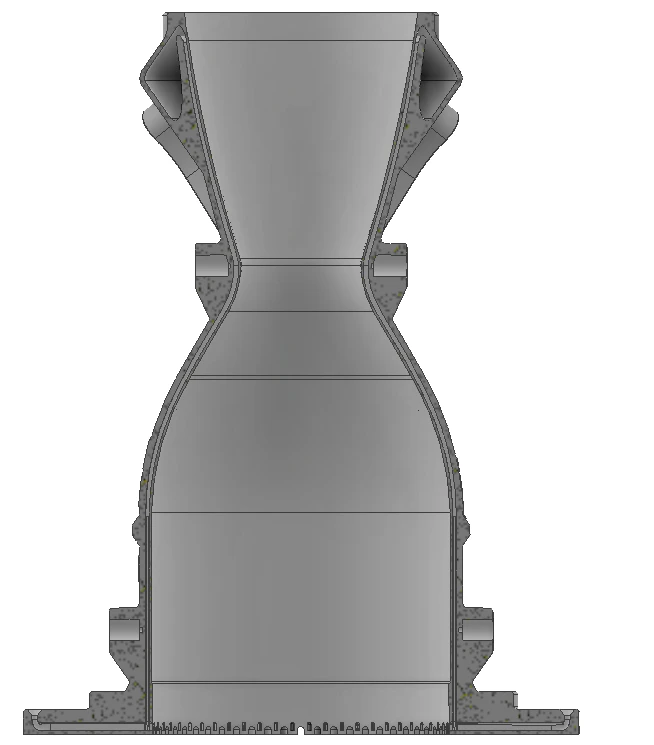
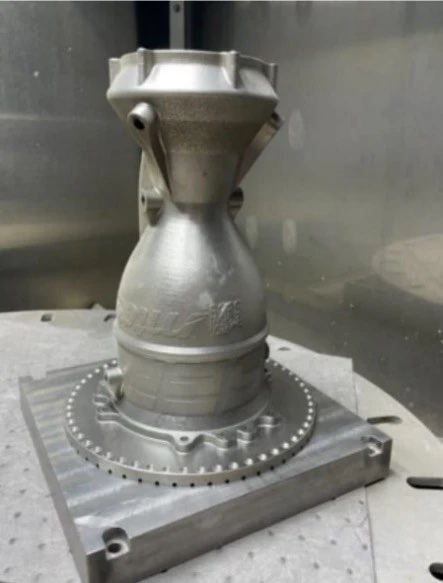
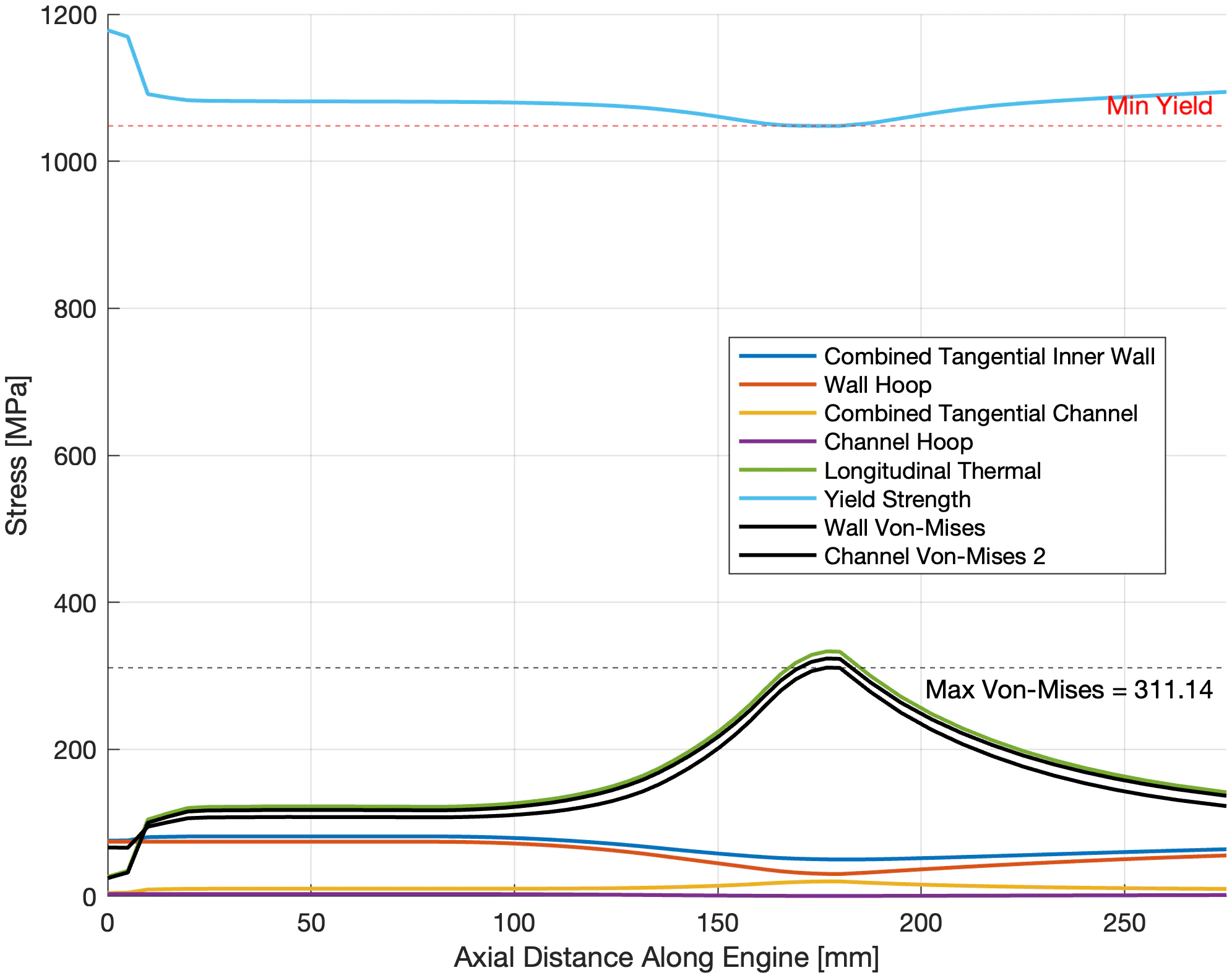
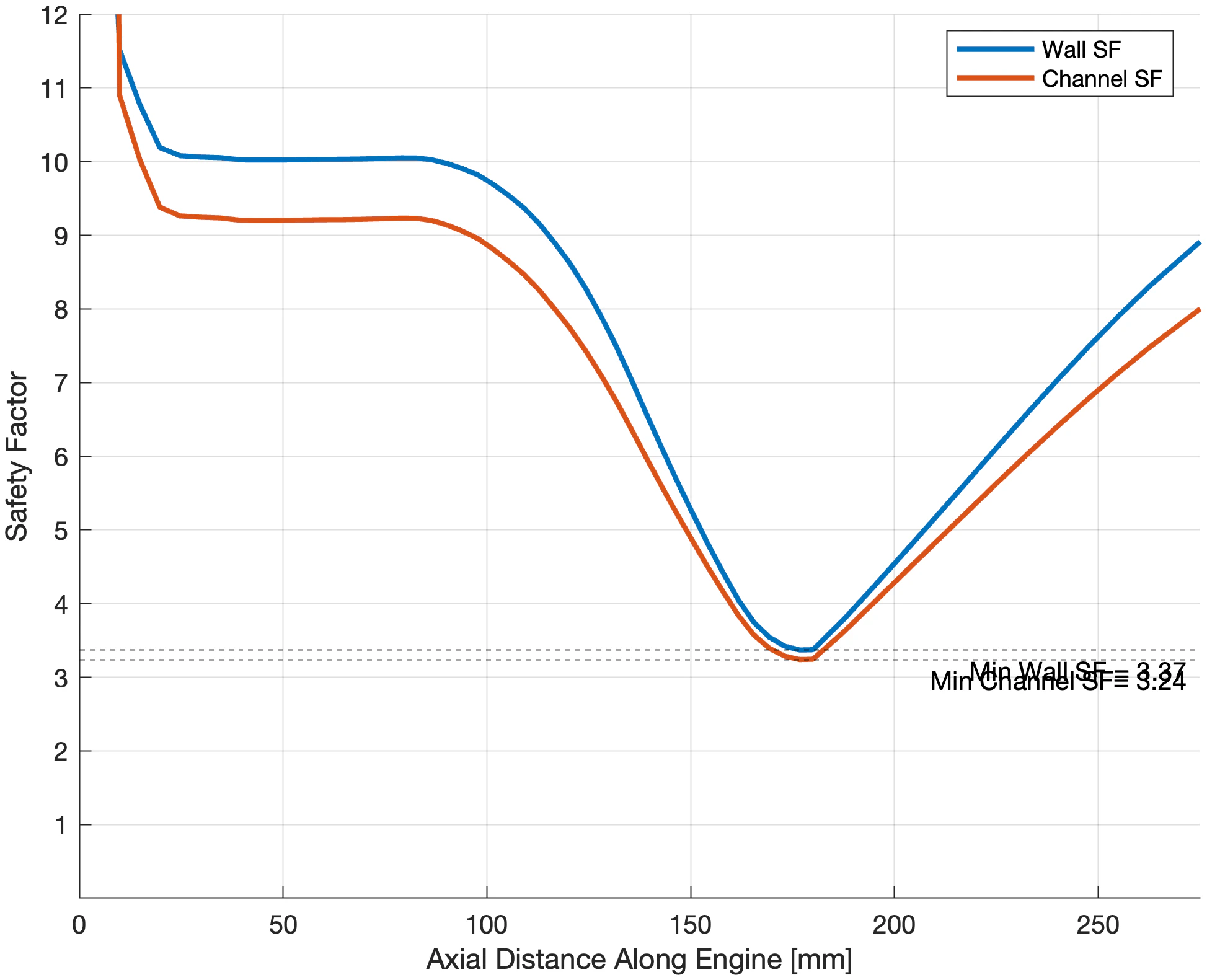
Engine 1 is a 5 kN regeneratively-cooled bipropellant engine running IPA and nitrous oxide, the University of Bristol's first student-built liquid engine. I led it as Engine Lead for BristolSEDS Experimental Propulsion, built for Race 2 Space 2024. Design point: 5 kN at 20 bar chamber pressure, O/F of 3, 0.64 kg/s fuel and 1.93 kg/s oxidiser through a like-like impinging doublet injector. Throat 48.13 mm, expansion ratio 3.36, chamber 119.6 mm across and 307.6 mm long. The chamber is printed in Inconel with regenerative channels, film cooling and 2% PDMS in the fuel as an ablative additive. Minimum safety factor along the engine: 3.37 in the wall, 3.24 in the channels.

Loading model 0%
Three burns in one day
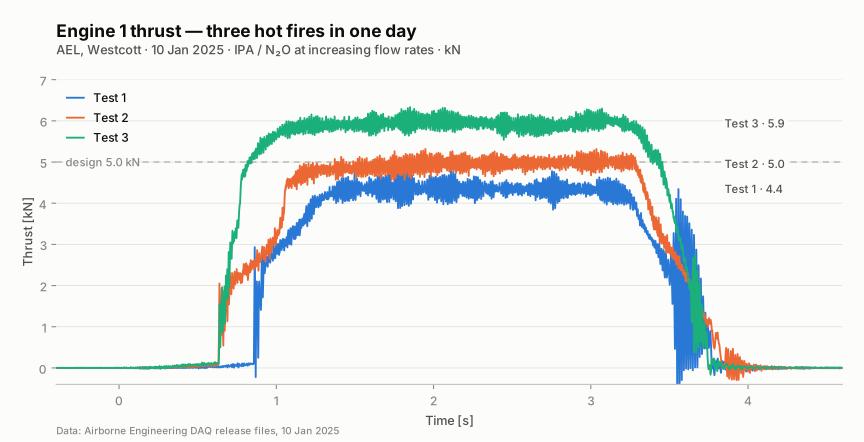
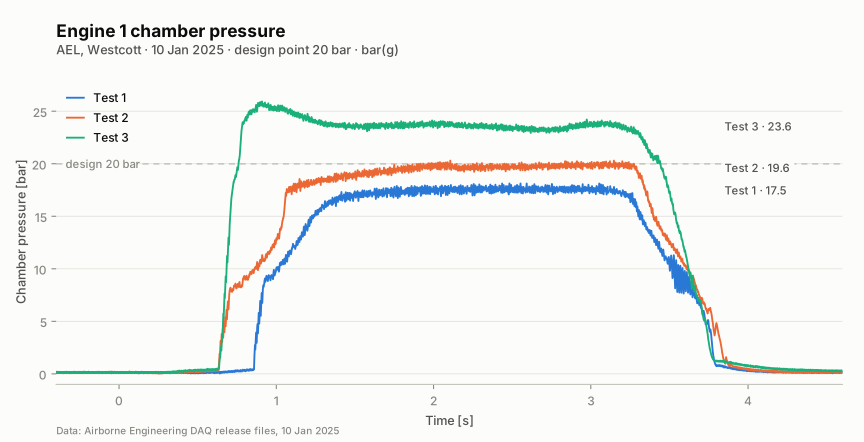
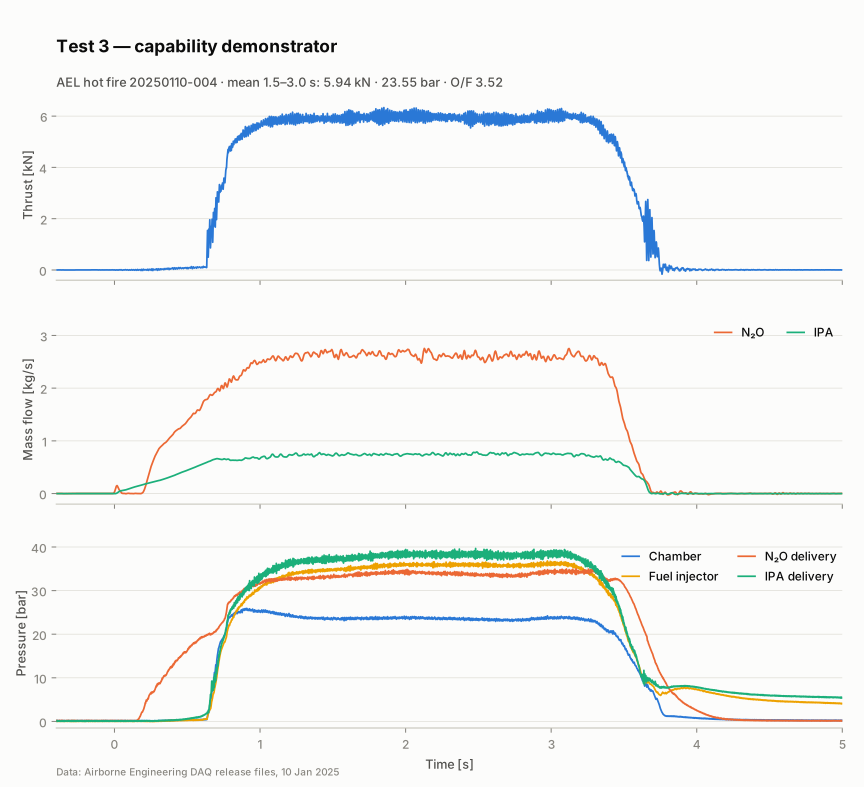
10 January 2025, Airborne Engineering's test cell at Westcott. Three hot fires of about 3 s each, stepping the flow rates up between them. Test 1 aimed to match the design flow rates and gave 4.35 kN at 17.48 bar. Test 2 aimed for the design chamber pressure and gave 4.96 kN at 19.62 bar, within 1% of design thrust. Test 3 was the capability demonstrator: 5.94 kN at 23.55 bar, 19% past design thrust, with no damage to the chamber. All figures are means over 1.5 to 3.0 s of each burn, recomputed from the raw DAQ files and matching the test report.
Every camera on the three burns
Each burn was covered by the cell camera, a GoPro close in on the stand and a second camera from the side, plus a downrange angle for Test 3. The GoPro cuts run the full sequence, sparkler to vapour; the second-camera clips are tight on the burn itself.
Test 3: 5.94 kN
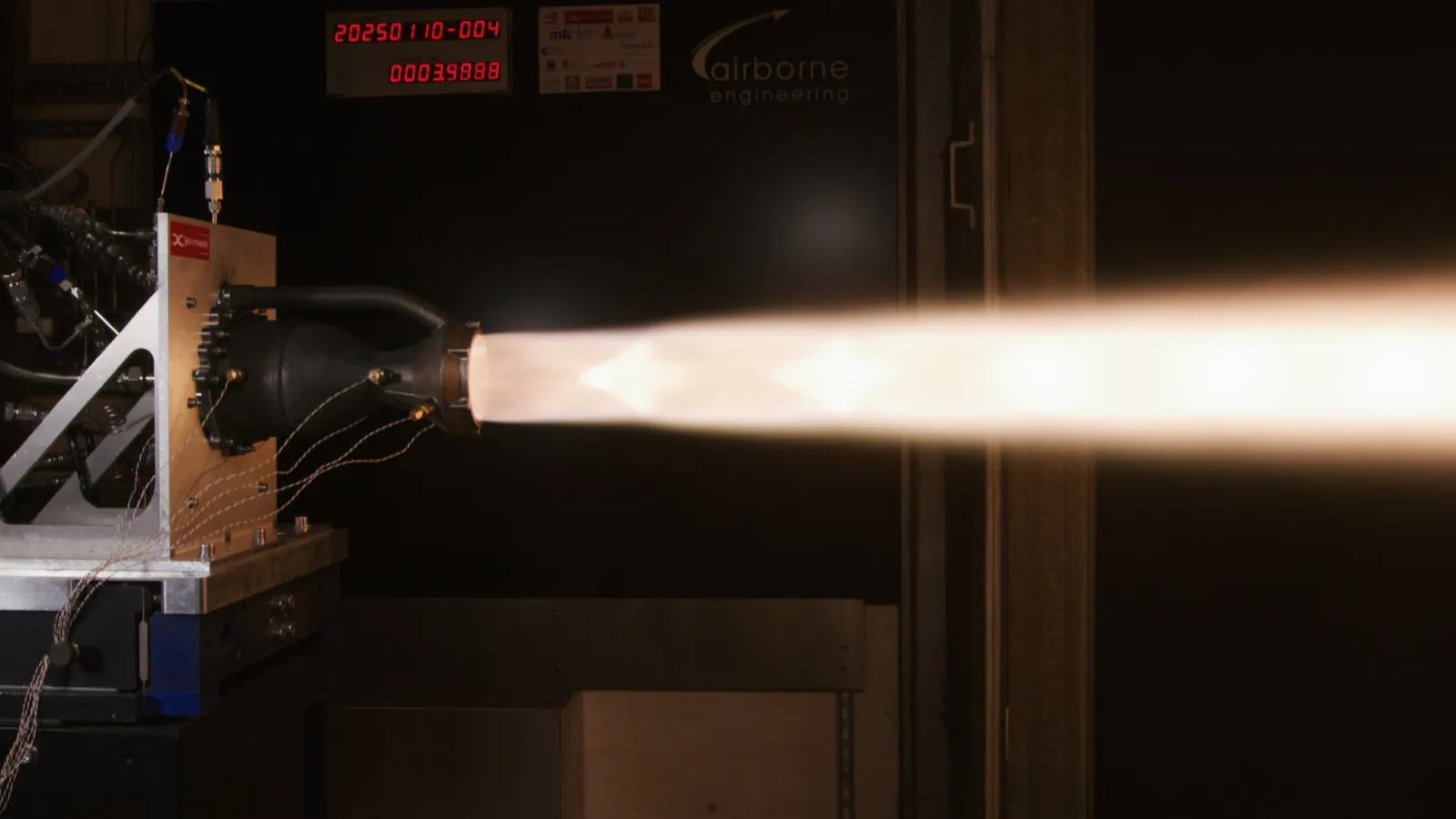
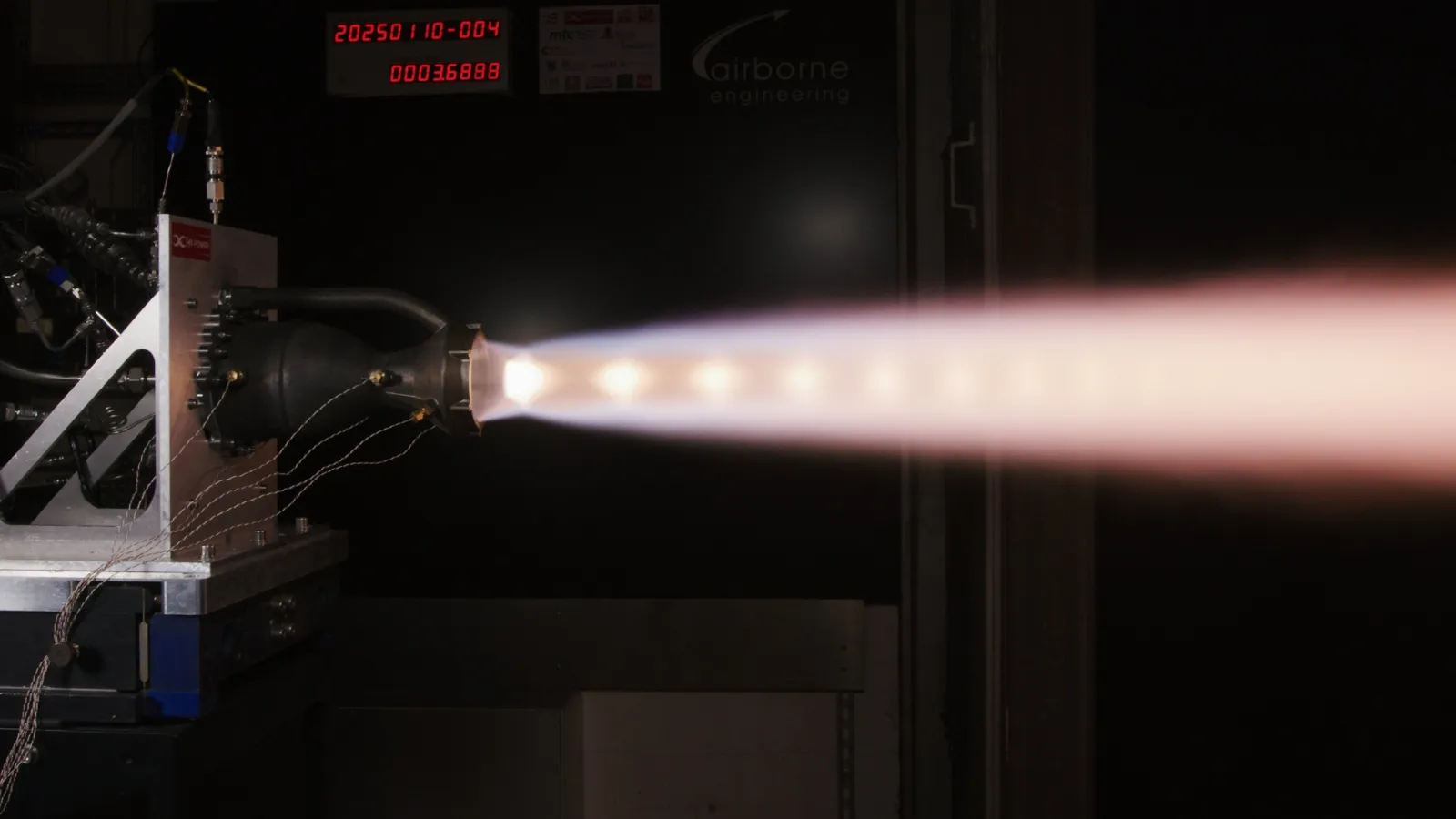
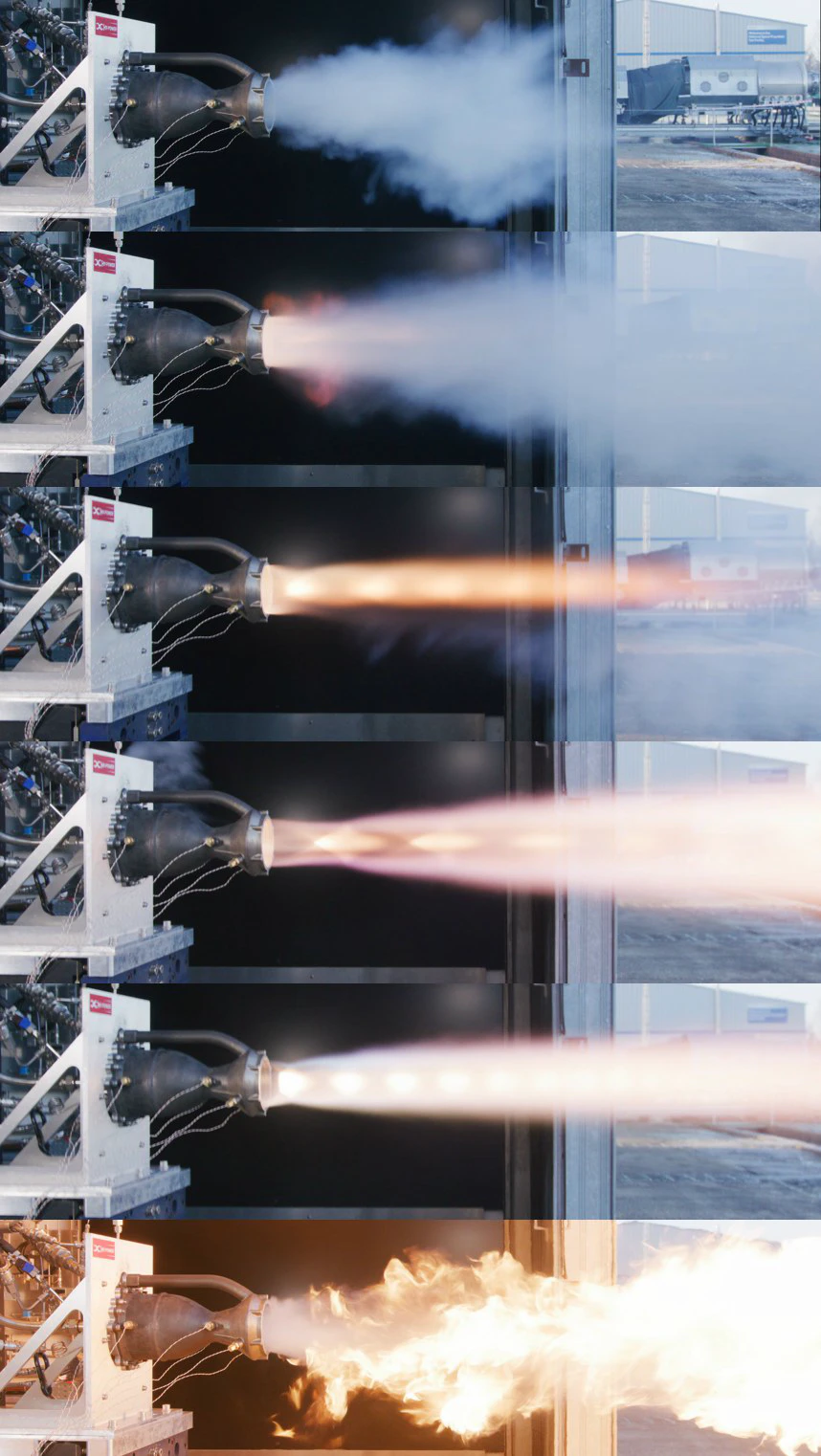
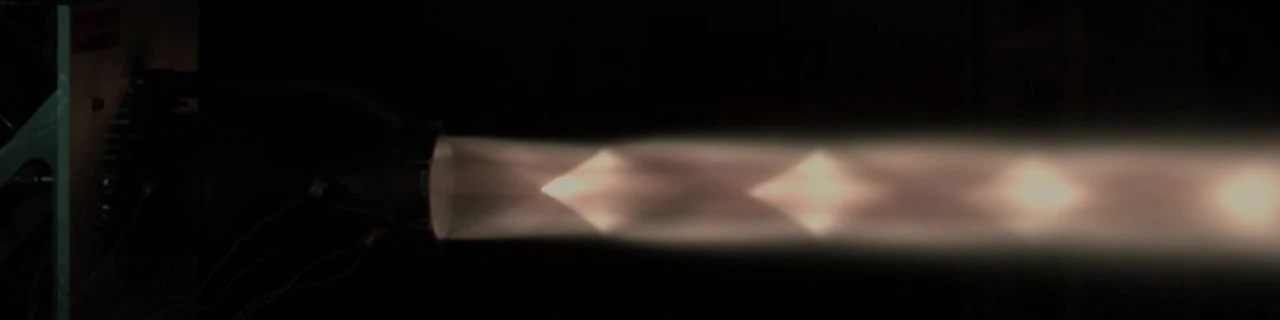
Test 3 ran at 23.55 bar and an O/F of 3.52; Isp 179.8 s. At steady state the plume carries a train of Mach diamonds. The detail plot puts thrust, chamber, injector and delivery pressures and both propellant mass flows on one time axis; the six-frame strip is the slow-motion camera from ignition through steady state to shutdown. 5.94 kN set the UK student thrust record at the time.
One millisecond at a time
The slow-motion camera ran at 1000 fps on Test 3. Ignition shows the first flame leave the nozzle and the shock diamonds settle into place along the plume. Shutdown is the reverse: the plume collapses and a fireball rolls around the nozzle. Each clip here is a short cut of a much longer transient. The still is my pick from the slow-motion footage.
Test day
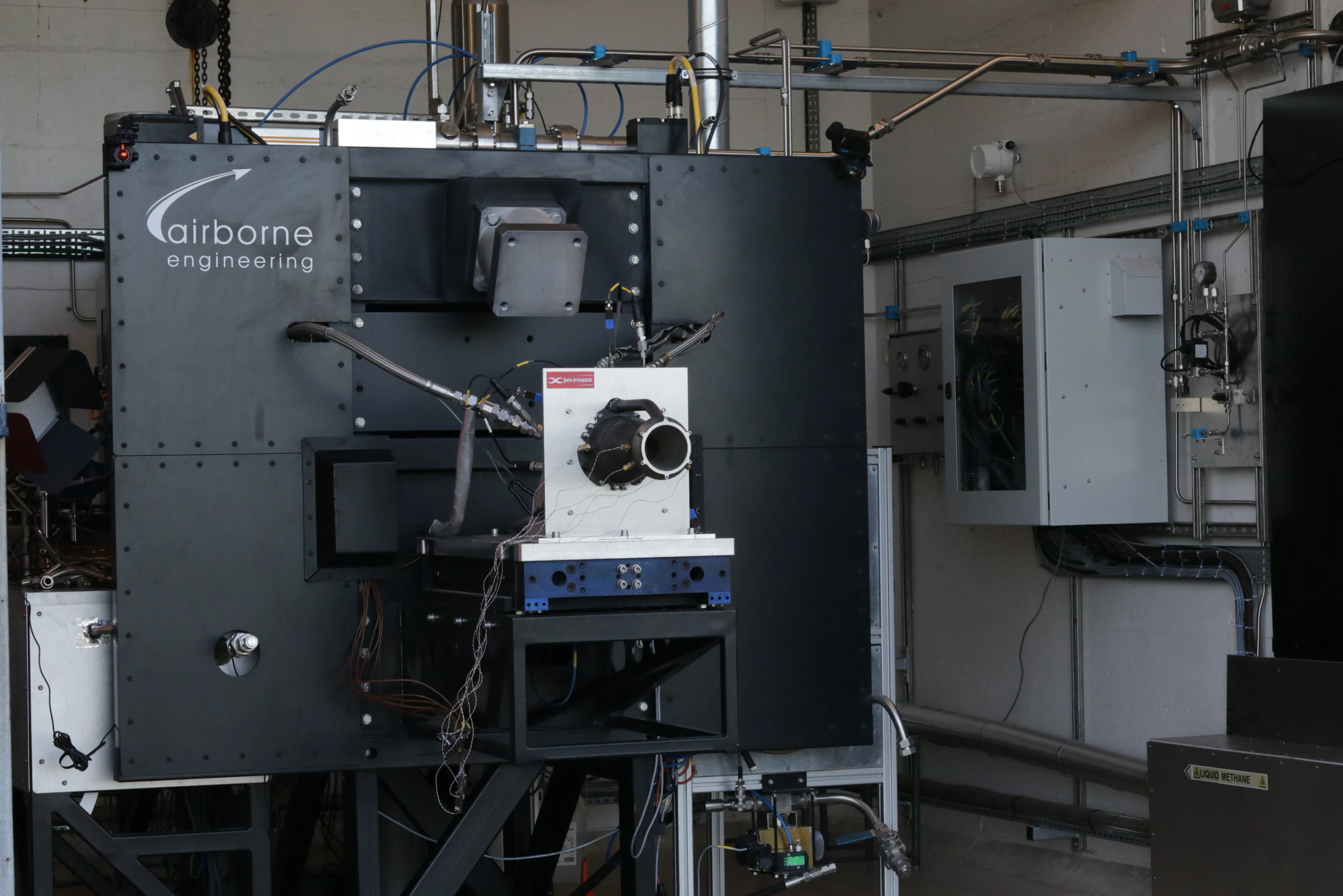
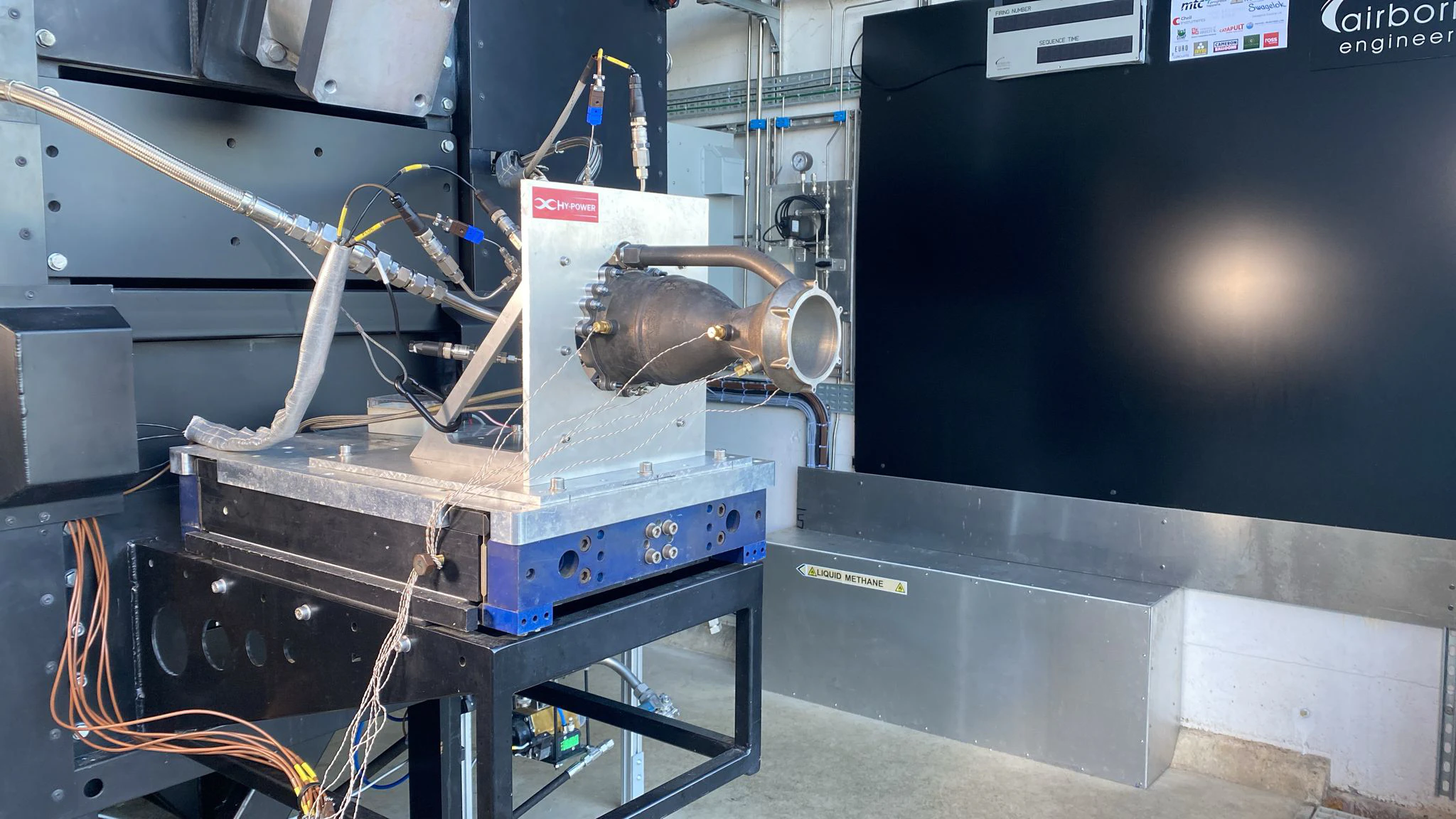
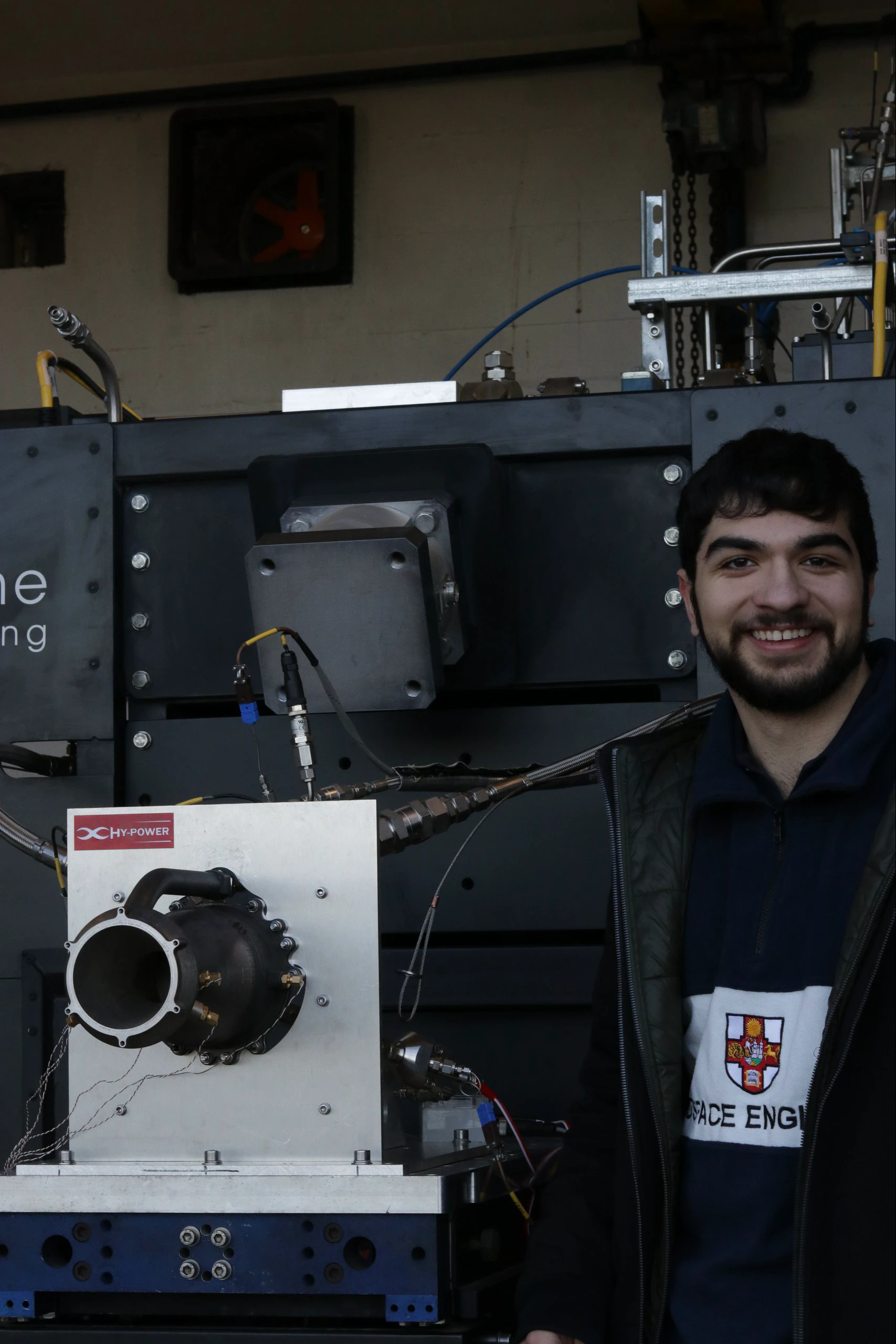
Three burns, one afternoon in the Airborne Engineering cell at Westcott. The engine bolts to a horizontal thrust stand with the nozzle pointing out of the open cell doors, thermocouples and pressure transducers wired back to the AEL DAQ, and a test-ID board on the back wall that stamps every firing.
Then the full stack
In September 2025 Engine 1 fired again at Astron Systems, this time as part of HyPower's complete launch vehicle for the EuRoC qualification campaign: vertical tank, horizontal engine. Hotfire 1 lost nitrous to a leak during fueling and gave a 1 s burn at 3.7 kN. Hotfire 2 was the full-duration run, 7 s at 4 kN tapering to 3.6 kN, enough for 30.7 m/s off the rail against EuRoC's 30 m/s requirement. Hotfire 3, with the regulator up to 50 bar, was a 0.86 s partial fill that peaked at 5.58 kN. That campaign has its own page.